
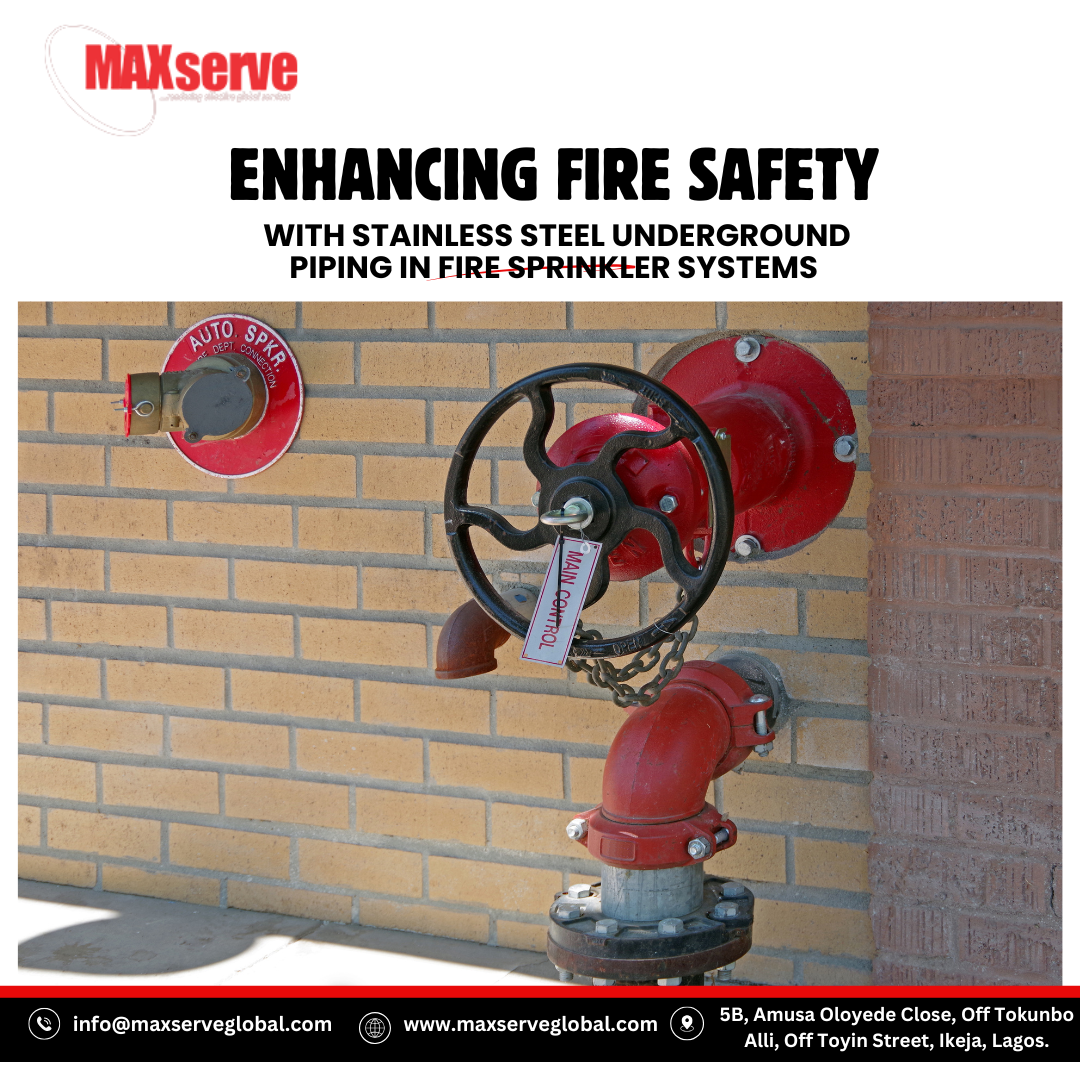
Enhancing Fire Safety with Stainless Steel Underground Piping in Fire Sprinkler Systems
In today’s world, fire protection systems are not just a compliance requirement they are essential to safeguarding lives, property, and business continuity. Among the many components that make a fire protection system effective, fire sprinkler systems play a crucial role in preventing small incidents from turning into large-scale disasters.
While most people focus on sprinkler heads and alarms, the underground piping network which supplies water to these systems is often overlooked. The choice of materials used for these underground pipes can significantly impact system reliability, maintenance costs, and long-term safety.
At Maxserve Global Consulting Limited, we recently completed a major fire sprinkler installation project featuring stainless steel underground piping, delivering a robust and future-ready fire safety solution. In this article, we’ll explore why stainless steel is the material of choice, how the installation process ensures lasting performance, and what benefits it brings to building owners and facility managers.
The Role of Fire Sprinkler Systems in Modern Fire Protection
Automatic fire sprinkler systems are designed to detect and control fires at an early stage, preventing them from spreading. Once heat from a fire reaches a specific threshold, the sprinkler head activates, releasing water directly onto the affected area.
This immediate response can drastically reduce damage, giving occupants more time to evacuate and allowing emergency services to respond effectively.
However, for a sprinkler system to perform reliably, the water supply infrastructure especially the underground piping must remain strong, leak-free, and corrosion-resistant for decades.
Challenges of Traditional Underground Piping Materials
Historically, underground fire lines have been constructed using galvanized steel, ductile iron, or PVC materials. While these materials are affordable and widely available, they present several long-term challenges:
Corrosion: Underground moisture and soil chemicals cause steel and iron pipes to rust over time.
Leaks and Bursts: Corroded pipes weaken, leading to pressure drops and system failures.
High Maintenance Costs: Frequent repairs, testing, and replacements drive up lifecycle costs.
Contamination Risks: Rust particles and sediment can clog sprinkler heads or valves.
These limitations prompted the shift toward more durable, corrosion-resistant materials, and stainless steel has emerged as the most reliable option.
Why Stainless Steel Underground Piping is the Future
Stainless steel piping offers a superior combination of strength, corrosion resistance, and longevity, making it ideal for underground fire protection systems. Let’s break down the key advantages:
1. Corrosion Resistance
Unlike carbon steel, stainless steel contains chromium, which forms a thin, protective oxide layer on its surface. This layer prevents rust and corrosion even when the pipes are exposed to moisture or harsh soil conditions.
2. Longevity and Low Maintenance
Stainless steel pipes have a service life exceeding 50 years, significantly reducing the need for frequent repairs or replacements. This translates into long-term cost savings and uninterrupted protection.
3. Strength and Pressure Handling
Fire protection systems operate under high water pressure. Stainless steel’s superior tensile strength ensures the pipes maintain structural integrity under demanding conditions.
4. Smooth Internal Surface
The smooth interior of stainless steel minimizes friction loss, allowing for efficient water flow and consistent pressure throughout the system critical during emergency activation.
5. Sustainability
As a 100% recyclable material, stainless steel aligns with green building standards such as LEED and ISO 14001, helping projects achieve sustainability certifications.
Our Project: A Showcase of Durability and Performance
At Maxserve Global Consulting Limited, our team recently completed a comprehensive fire sprinkler system installation that included stainless steel underground piping. The project scope covered:
Design and Engineering: Tailoring the system layout to meet NFPA standards and client requirements.
Underground Pipe Installation: Using stainless steel piping to ensure long-term corrosion resistance and reliability.
Above-Ground Fire Sprinkler Network: Integrating sprinkler heads, control valves, and alarm systems.
Testing and Commissioning: Conducting hydrostatic pressure tests, flow tests, and full system commissioning.
This project reflects our commitment to engineering excellence, quality materials, and compliance with international fire safety codes.
Key Benefits Delivered to the Client
By opting for stainless steel underground piping, the client experienced multiple benefits:
Improved System Reliability: Reduced risk of leaks and corrosion.
Extended Lifespan: Longer service intervals and fewer maintenance disruptions.
Cost Efficiency: Lower long-term operating and repair costs.
Regulatory Compliance: Meets NFPA 13, NFPA 24, and local fire authority standards.
Future Readiness: The piping system supports future building expansions without major modifications.
Compliance with NFPA and Local Fire Safety Standards
All our fire protection projects are designed in accordance with NFPA (National Fire Protection Association) codes and local authority guidelines. Stainless steel piping complies with:
NFPA 13 – Standard for the Installation of Sprinkler Systems
NFPA 24 – Standard for the Installation of Private Fire Service Mains
FM Global & UL Listed Materials – For safety and quality assurance
Following these standards ensures that every system performs efficiently, reliably, and safely under real-world conditions.
The Installation Process: Precision and Quality
The success of a fire sprinkler system depends not only on materials but also on the expertise of the installation team.
Our process includes:
Site Survey and Soil Testing – To identify potential corrosion risks and determine pipe placement depth.
Material Selection and Procurement – Using certified stainless steel pipes and fittings.
Trenching and Laying – Ensuring correct slope and bedding to prevent mechanical stress.
Joint Welding and Testing – Using high-grade welding methods and ultrasonic inspections for integrity.
Hydrostatic Pressure Testing – Verifying system readiness before commissioning.
This detailed process guarantees a seamless, leak-free underground network capable of delivering water instantly when needed.
The Future of Fire Protection Infrastructure
With increasing demands for sustainable, reliable, and low-maintenance fire systems, stainless steel piping is becoming the standard for high-end commercial, industrial, and institutional facilities.
Whether it’s for a warehouse, hospital, or manufacturing plant, using stainless steel ensures long-term safety and peace of mind.
Conclusion
When it comes to fire protection, quality and reliability cannot be compromised. Choosing stainless steel underground piping for your fire sprinkler system is not just a technical decision — it’s an investment in safety, efficiency, and the future of your facility.
At Maxserve Global Consulting Limited, we specialize in designing and installing comprehensive fire protection systems that meet global standards and deliver unmatched performance.
Call to Action
🔥 Ready to upgrade your fire protection system?
Contact Maxserve Global Consulting Limited today to schedule a site inspection or consultation.
Let’s build a safer future together: one project at a time.
📧 Email: info@maxserveglobal.com
🌐 Visit: https://maxserveglobal.com/